Discover more about your Coding and Robotics education service in George.
I care deeply about serving the next generation through education. Especially with the power of modern technology.
I have a BA Journalism, Honours in Anthropology, Honours in Theology as well as a Post Graduate Certificate in Education (Senior Phase and FET). Having taught and served in schools for nearly ten years (as a teacher, youth pastor and community service leader), the benefits of home schooling are overwhelming.
I am here to help serve your family through your learning journey.

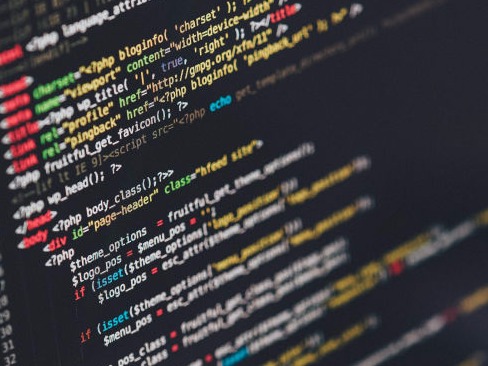
Being able to actively interact and control technology is an essential 21st Century skill. Many people will not go into active software development but will definitely use the type of thinking that comes from coding: collaboration, problem-solving, abstraction, decomposition and pattern recognition to name a few. There are so many exciting resources that I use in this space, from the MIT developed Scratch (to make stories, games and animations), code.org (to understand the fundamentals of coding through puzzles and projects), SonicPi (a live coding music tool) and several others that allow learners to, at their level, explore their passion and have fun while doing so.
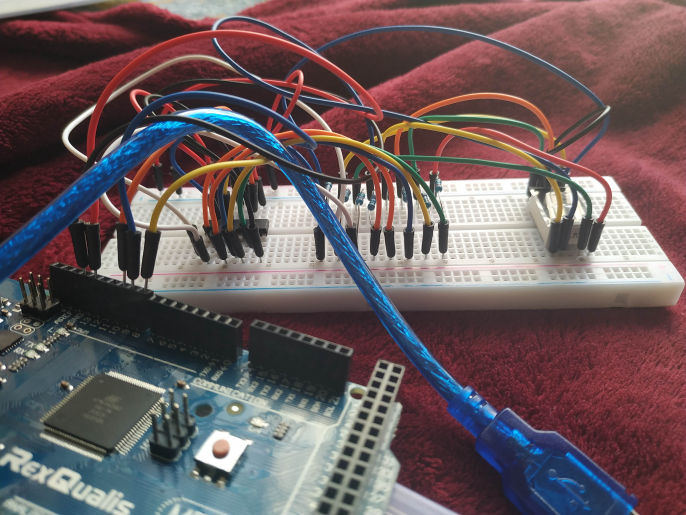
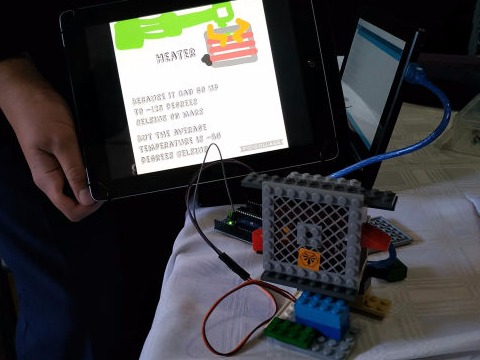
Coding and robotics go hand in hand. There are few things more exciting than developing a program, trying, failing and eventually succeeding in seeing a robot that you built, programmed and tested; operate. Perseverance isn’t the only skill that is developed in robotics. Learners will begin to understand the logical flow of electronics and become attuned to real-world applications. Depending on learners' ages, I use Arduino, Micro:Bits and other components, such as Lego, to challenge them and unlock the magic of making and controlling robots.
When current 13 year-olds reach working age, about 65%of the jobs they will do don’t currently exist. They are going to need to know how to do far more things than could be taught with rote learning. In using thinking tools and thinking skills, learners are given strategies and trained how to learn. The big idea here is to make thinking visible, understand our thinking and use it to create opportunities and to be able to learn anything.
Projects are an excellent way to remove the isolation that teaching individual subjects often creates. Science, technology, engineering, art and mathematics can be combined to ensure that real-world problems are investigated, with real-world solutions being developed. Learners holistically engage with topics to better understand why STEAM subjects are relevant and applicable. Robotic components as well as Lego are extensively used in both long term and short term projects.
Lastly, in homeCode, I want to make sure that the next generation has a healthy relationship with technology. There is a lot of misinformation on both sides of technology arguments. As with all things, this is an issue of the heart. I use Google and Common Sense Media tools in learners’ contexts to make learners and parents aware of the dangers of modern tech, how to stay safe and ultimately use what can be good for good.
Class Structure
Classes have a maximum of eight learners with laptops, Lego and all other robotics resources being included.
Once a week for one hour and fifteen minutes, learners engage with their individualised homeCode curriculum.
Terms follow government school 4 term calendars with extra events taking place throughout holidays.
+ Annual R1000 admin fee (includes all resources)
+ Annual R900 (each) admin fee
(includes all resources)
+ Annual R800 (each) admin fee
(includes all resources)
Bishop's Place, 23A Cathedral St, George Central, George, 6530 (Good News Bible Church)
084 622 0368
chris@homecode.co.za